Epoxy Flooring in Cedar Falls, Built on a Tested Slab

Garage, basement and commercial floors ground to a named profile, moisture-tested before the price is final, and cured to the slab rather than the calendar.

Cedar Falls Epoxy Flooring has spent more than 20 years putting down epoxy flooring in Cedar Falls, IA and across the Cedar Valley, from epoxy garage floors and basement coatings to polished concrete, polyaspartic systems and commercial and industrial floors. Every job starts with the slab, because a coating is only as good as the concrete it is bonded to, and most failed floors we are called to look at failed at the bond rather than in the coating itself.

We grind or shot blast the concrete instead of acid etching it, write a moisture test into the scope before the price is final, and name the product line, coat count and finished thickness in the quote. That way a homeowner, a shop owner or a facilities manager can hold the finished floor up against the paperwork and see that what was promised is what went down.

The work covers flake and metallic epoxy floors, polished and densified concrete, concrete grinding and repair, ESD flooring for electronics work, and coated floors for plants, labs, warehouses and commercial kitchens. Whether the job is a two-car garage on a cul-de-sac or a production floor that cannot stop running, the same rules about preparation, testing and cure apply.

Get Your Free Quote

Fast response • No obligation

So we can reach you about your request.

So we can send you a confirmation after you submit this inquiry form.

  • 20+ Years of Floor Work
  • Moisture Test in Every Scope
  • Free Written Estimates

What we do

Our Services

Epoxy flooring and concrete coatings for Cedar Falls garages, basements and shops

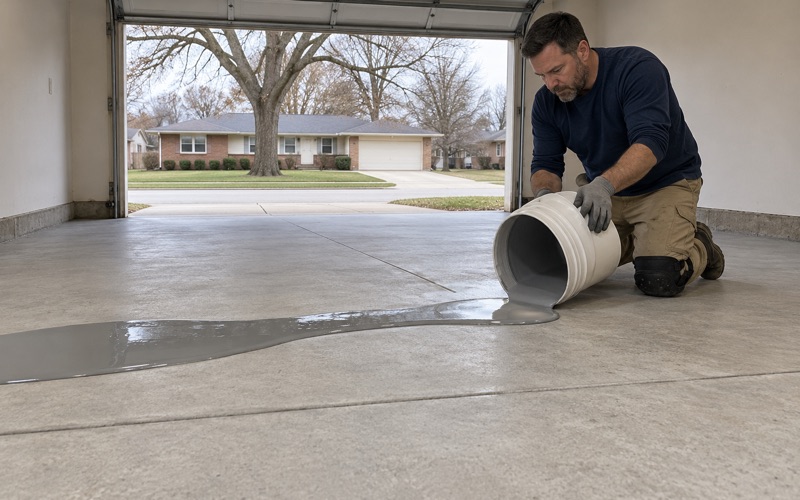
A ribbon of gray epoxy base coat being poured onto a freshly ground garage slab at a Cedar Falls ranch house.

Epoxy Garage Floor

Ground, moisture-tested epoxy garage floors in Cedar Falls with flake and polyaspartic systems built to handle Iowa road salt and warm tires.

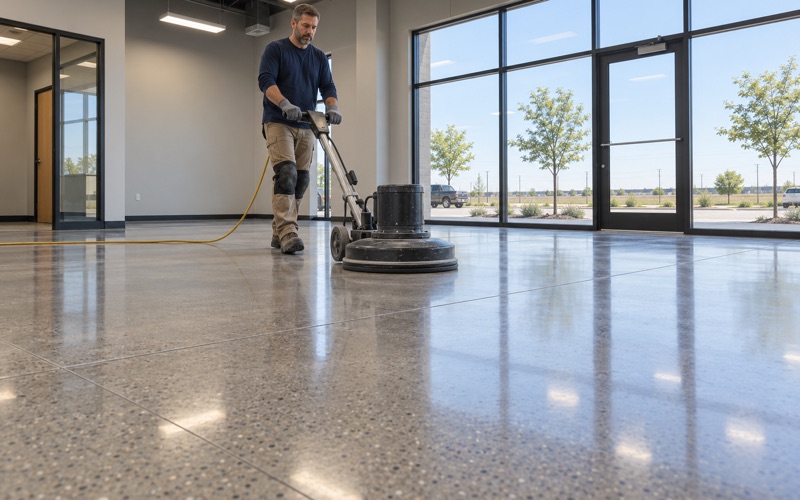
A high-speed burnisher bringing up the shine on a new polished concrete floor in the front office of a Cedar Falls tilt-up building.

Polished Concrete Floors

Ground, densified and polished concrete floors for Cedar Falls stores, offices, warehouses and basements, with the aggregate look and sheen you pick.

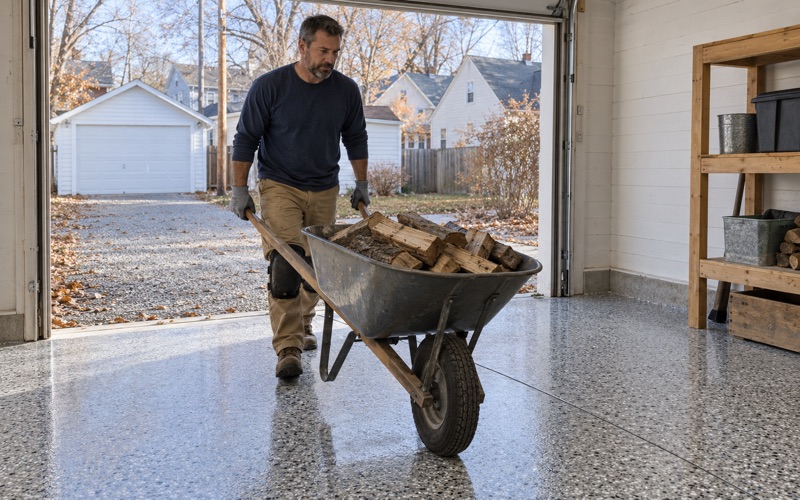
A wheelbarrow of split firewood rolled onto a same-day polyaspartic flake floor in the detached alley garage of an older Cedar Falls house.

Polyaspartic Floor Coating

Fast-curing, UV-stable polyaspartic floor coatings for Cedar Falls garages and shops, installed over a ground, moisture-tested slab.

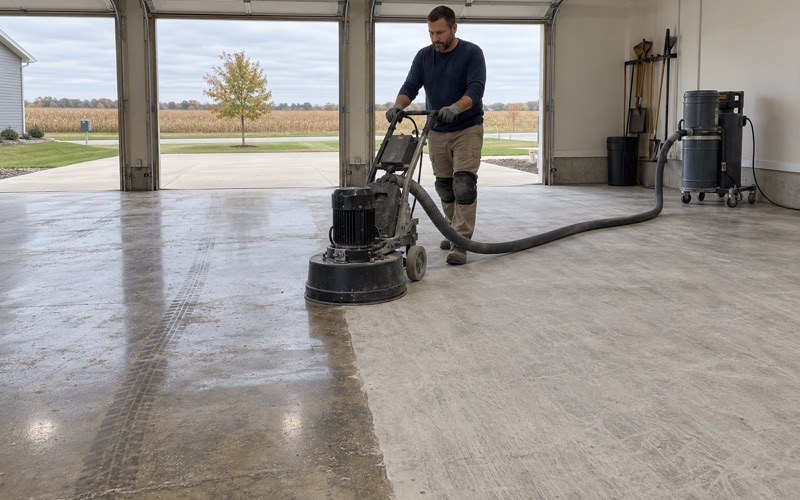
A walk-behind planetary grinder opening an old sealed slab in a newer Cedar Falls three-car garage, the ground lane beside the glossy old sealer.

Concrete Grinding

Diamond grinding and shot blasting in Cedar Falls to remove old coatings, level slabs and open concrete to a named profile before it is coated.

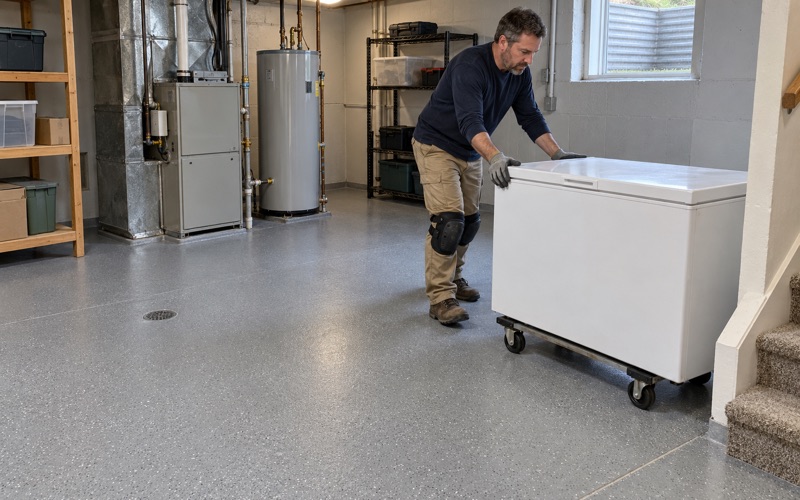
A chest freezer rolled on a dolly onto a new gray quartz epoxy floor in the lower level of a Cedar Falls split-level.

Basement Floor Epoxy

Basement floor epoxy in Cedar Falls built on a moisture test and a read for past water, with systems for damp slabs, older floors and finished rooms.

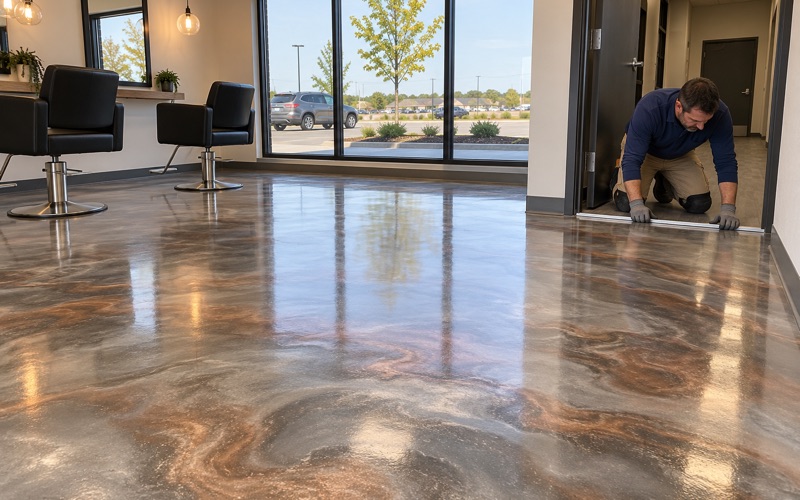
A brushed aluminum transition strip pressed into place at the back doorway of a new silver and copper metallic epoxy floor in a Cedar Falls salon.

Metallic Epoxy Floor

Marbled metallic epoxy floors for Cedar Falls basements, showrooms and bars, installed over a ground, tested slab and sealed against yellowing.

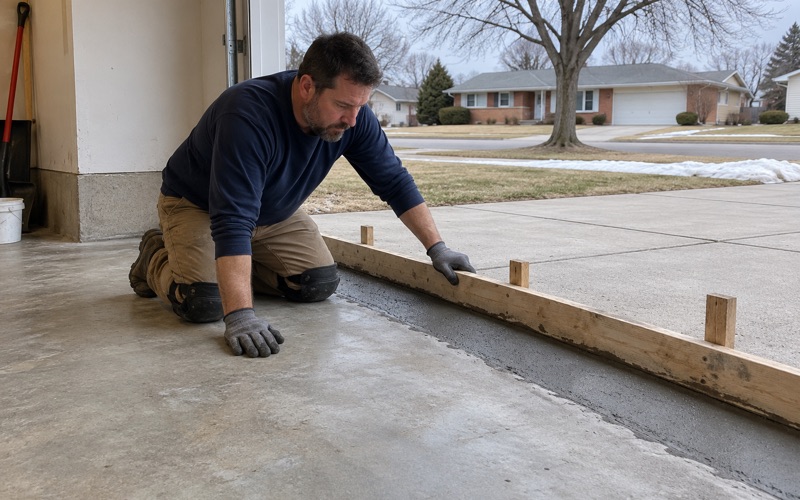
A salt-spalled garage door threshold at a Cedar Falls ranch house cut back and refilled with repair mortar against a staked form board.

Concrete Floor Repair

Crack, spall, joint and salt-scaling repair for Cedar Falls garage, basement and shop slabs, with honest advice on when replacement is the better call.

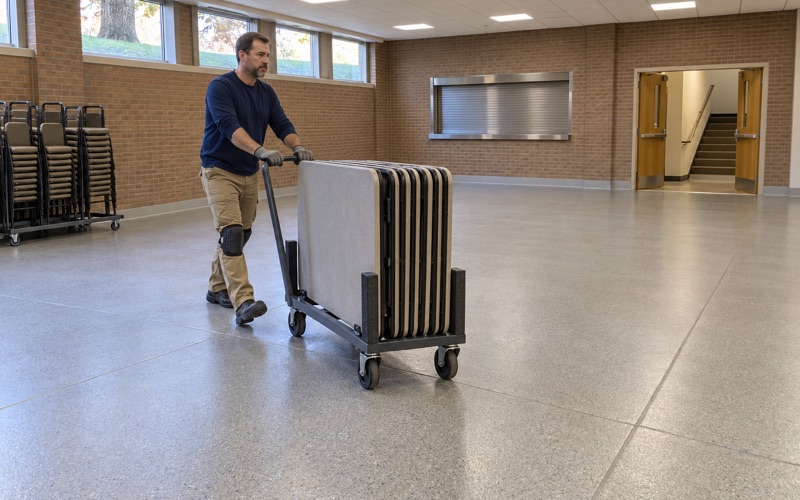
Folding tables wheeled on a dolly across a new quartz epoxy floor in the fellowship hall of an older Cedar Falls church.

Commercial Epoxy Flooring

Commercial epoxy floors for Cedar Falls stores, offices, clinics, gyms and service bays, scheduled around your hours with paperwork in order.

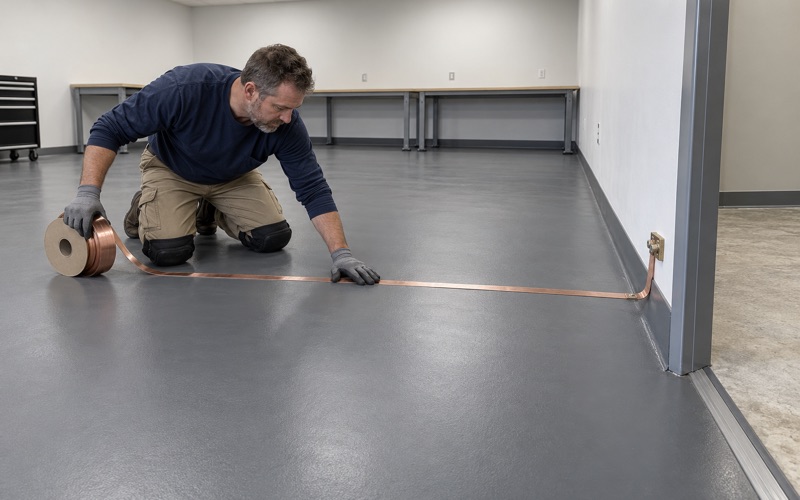
A copper grounding strip being pressed down on the primed floor of a Cedar Falls electronics room before the static-dissipative epoxy goes on.

ESD Flooring

Static-dissipative and conductive epoxy floors for Cedar Falls electronics work, labs and server rooms, grounded and resistance-tested before handoff.

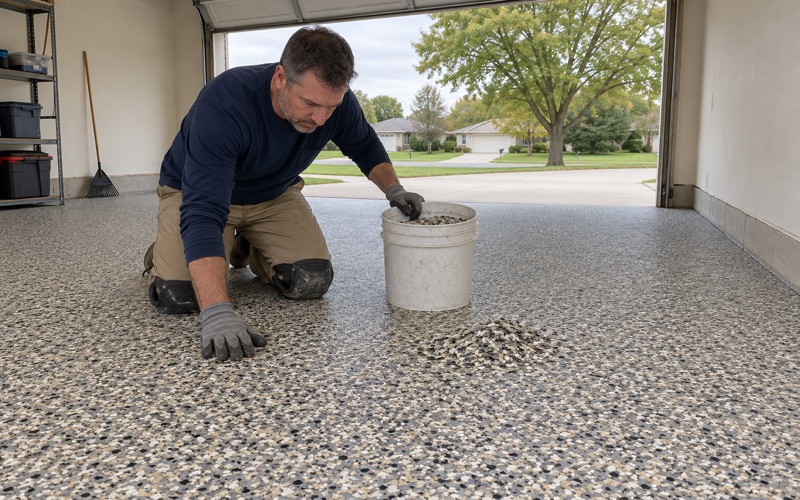
A cured flake floor scraped and swept before its topcoat in a Cedar Falls ranch house garage, the loose chips collected in a bucket.

Flake Epoxy Floor

Full-broadcast vinyl flake epoxy floors for Cedar Falls garages, basements, mudrooms and shops, in the blend and chip size you choose.

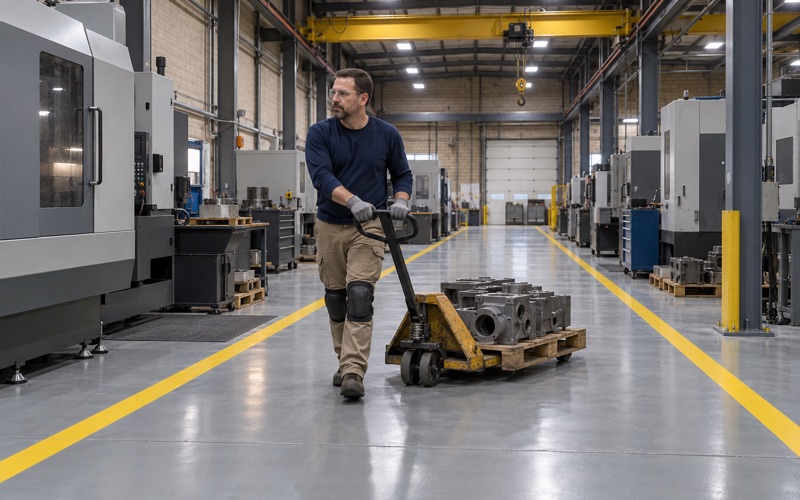
A pallet of gray iron castings moved on a pallet jack down a yellow-lined aisle on the new epoxy floor of a Cedar Falls machining plant.

Industrial Epoxy Flooring

High-build epoxy and urethane cement floors for Cedar Falls plants, foundries, test labs and warehouses, installed in phases around production.

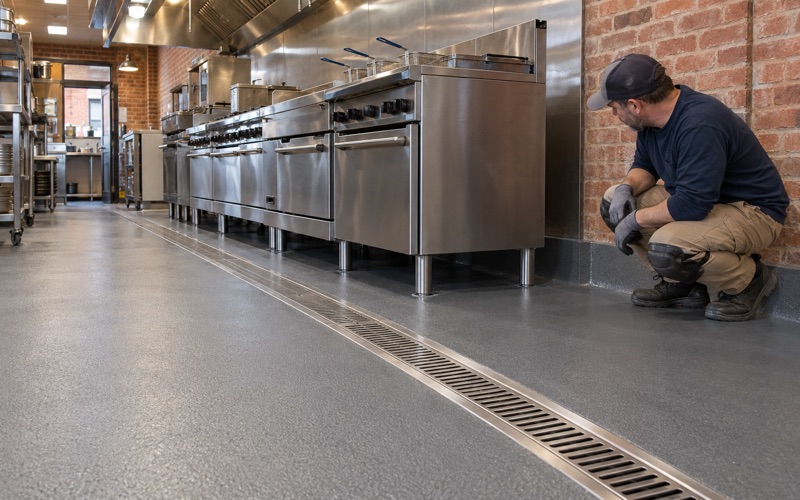
A urethane cement kitchen floor with an integral coved base and trench drain in a downtown Cedar Falls restaurant, the cove checked behind the range.

Commercial Kitchen Flooring

Seamless, coved kitchen floors for Cedar Falls restaurants, schools and food businesses, built for hot washdown, grease and health inspections.

Twenty Years on Cedar Valley Concrete

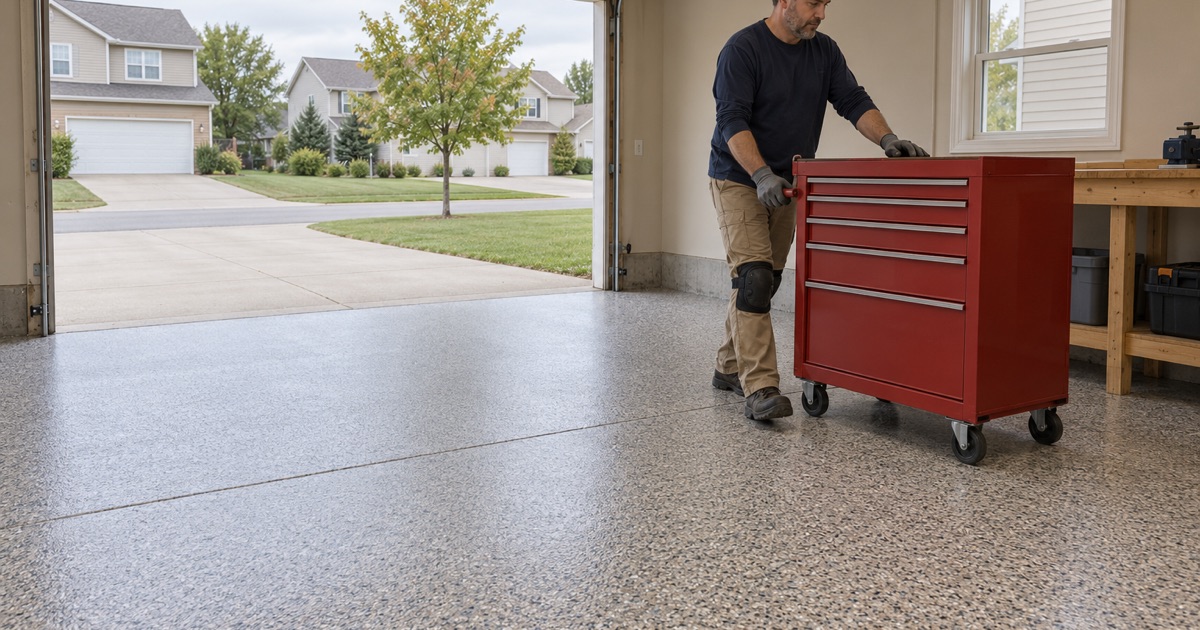
A finished tan, gray and charcoal flake floor in the attached garage of a 1990s Cedar Falls two-story, a rolling tool chest wheeled back into place.

20+ Years of Epoxy Flooring Work

We have been grinding, repairing and coating concrete floors for more than two decades. In that time we have learned that most of the decisions that decide whether a floor lasts are made before the first coat is mixed, in how the slab is read, tested and opened up, and that is where we spend our attention.

Why Choose Cedar Falls Epoxy Flooring

Ground to a Named Profile

Every slab is opened with a diamond grinder or a shot blaster, and the proposal names the ICRI concrete surface profile we are grinding to, so the coating bonds to sound concrete rather than to the weak, acid-etched skin a careless installer leaves behind and later watches peel.

Moisture Tested Before Pricing

No garage, basement or shop slab gets a final price until a moisture test is written into the scope, because a house built in 2015 can still have a damp garage slab. That test catches vapor drive before it lifts a coating, rather than after a warranty claim is denied.

Cured to the Slab, Not the Calendar

Cedar Falls averages about 150 nights a year at or below freezing in the 1991-2020 normals for the Waterloo airport. We schedule cure windows from slab temperature and dew point, so an unheated garage in January is told to wait instead of being coated cold and left soft.

Salt-Ready Garage Systems

Iowa winters put brine and rock salt on every tire that rolls into a garage. Our garage systems are built with a broadcast and a chemical-resistant topcoat chosen for that exposure, so salt slush sits on the coating and wipes off rather than soaking into bare or thinly painted concrete.

Plain Talk on Warranties

Before a job is sold we explain what the coating warranty leaves out, and moisture vapor transmission and hydrostatic pressure are the first two exclusions we name. You learn the limits while there is still time to test and plan, rather than in a dispute after the floor fails.

Garage Floors Built for Cedar Valley Winters

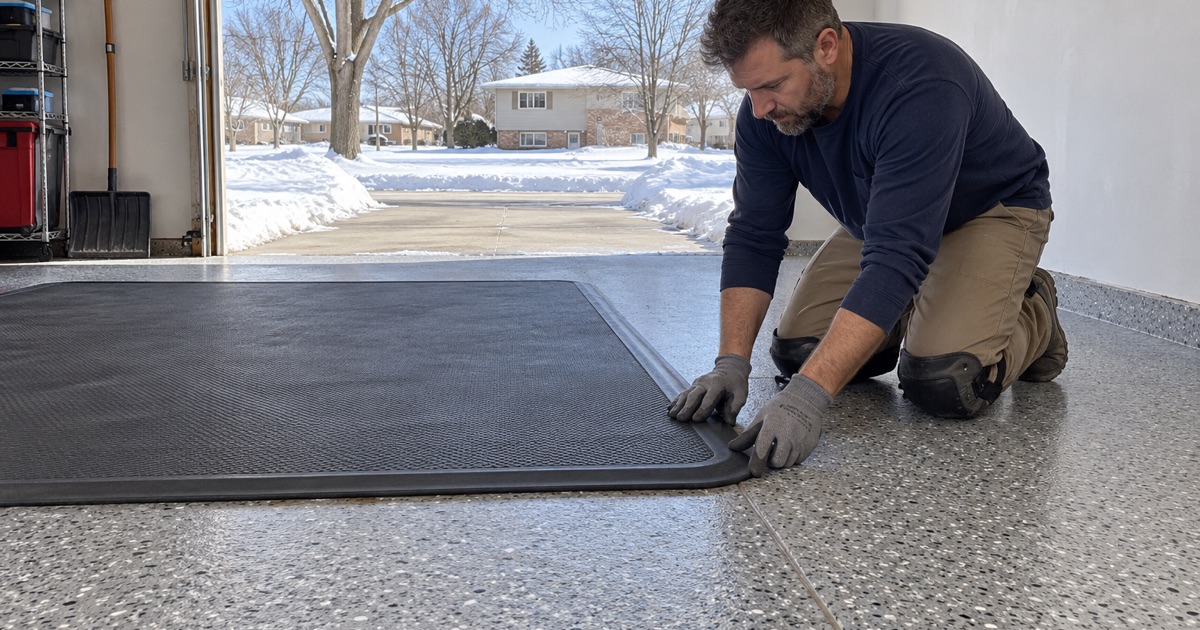
A rimmed containment mat laid where the tires stop on a salt-resistant flake floor in a Cedar Falls split-level garage on a snowy January day.

The Epoxy Garage Floor Process, Start to Finish

An epoxy garage floor job starts with a walk of the slab, a crack and spall map and a moisture test. After that we grind, vacuum, repair, prime, build the base coat, broadcast flake or quartz if the system calls for it, scrape and vacuum again, and seal with a clear topcoat.

The floor is ready for foot traffic before it is ready for a car, and we give you the dates for both in writing. Parking too early on a coating that has not reached full cure is one of the most common ways a new floor gets marked.

Attached Garages, Dust and Odor Control

In an attached garage the house shares a wall, a door and sometimes an air path with the work. Our grinders run with vacuum dust capture at the machine, and we seal the house door and plan around the furnace and any return air close to the garage.

We offer low-odor products for attached garages as a comfort and re-entry choice. They are not an Iowa legal requirement, and we do not sell them as one, but many families with kids or pets prefer them.

Moisture Testing a Garage Slab

Moisture moving up through concrete is the most common reason a garage coating blisters or lets go. We test before we price, using a plastic sheet test under ASTM D4263 as a screen and calcium chloride or in-situ relative humidity testing under ASTM F1869 or F2170 where the floor calls for numbers.

The results decide the primer and sometimes the system. A slab that reads high gets a moisture-mitigation primer or a different plan, rather than a standard coat that is likely to fail.

Newer Homes and Damp Garage Slabs

A common surprise is that a newer house does not guarantee a drier garage. The model residential code exempts garage slabs from the under-slab vapor retarder it requires under heated living space, so many garage slabs sit directly on the base course with nothing to slow vapor coming up.

That is why we test every slab whatever year the house was built. Cedar Falls has more than 2,000 housing units built since 2010, and every one of their garages gets the same test as a 1950s slab.

Cracks, Spalls and When to Replace a Slab

We map cracks, spalls and pitting before quoting, and fill or rebuild them with repair materials matched to the coating system. Hairline shrinkage cracks are routine work, and so are small spalls at the edges and control joints.

When a slab has heaved, broken into plates or is crumbling across large areas, we say plainly that it needs repair or replacement before it should be coated. Coating over a slab that is moving or failing only hides the problem for a season.

What Brine and Rock Salt Do to Garage Concrete

Cedar Falls sits in a zone the city lists as Severe for weathering, and from November through March road crews spread salt and brine that ride into the garage on tires. On bare concrete that salty water soaks in, freezes and thaws, and slowly scales the surface.

A sealed, coated floor keeps that water on top where it can be squeegeed out the door. We build garage systems with that use in mind and recommend a slight texture so the floor is not slippery when slush melts.

Cold-Weather Installs in Unheated Garages

Epoxy and polyaspartic coatings need the slab warm enough and comfortably above the dew point to cure correctly. In an unheated garage in mid-winter the slab can stay too cold for days at a time, even when the afternoon air feels mild.

We measure the slab surface and the dew point spread rather than reading the forecast. When those numbers say to wait, we tell you and book the work for spring rather than leave a coating that cures soft or clouds with amine blush.

Hot Tire Pickup and Thin Coatings

Hot tire pickup happens when warm tires soften a thin coating and pull it off the slab as the car cools and drives away. It is the classic failure of one-part paints and thin roll-on products laid over unground concrete.

We prevent it with a ground surface, a 100 percent solids base or a polyurea base coat, and a topcoat built to the thickness written in the quote. A floor that is properly bonded and built does not lift under a warm tire.

Store-Bought Kits Versus a Professional Floor

Big-box epoxy kits are thin, water-based coatings designed to be rolled over an acid-etched slab by a homeowner over a weekend. They can look good at first, but they rarely survive road salt and warm tires for long on an Iowa garage floor.

A professional system starts with mechanical grinding, uses higher-solids materials and builds real thickness with a broadcast and a clear topcoat. The difference shows up in the second and third winter, not the first week.

Epoxy Garage Floor Cost and Price Factors

The price of an epoxy garage floor depends on the size of the garage, the condition of the slab, the number of repairs, whether an old coating has to be removed and which system you choose. A flake system with a polyaspartic topcoat costs more than a single solid color coat, and a slab that tests damp may need a mitigation primer.

We give you a written number after the floor is mapped and tested. The quote lists the product line, coat count and finished thickness, so two bids can be compared on what actually goes down.

Basements and Damp Slabs

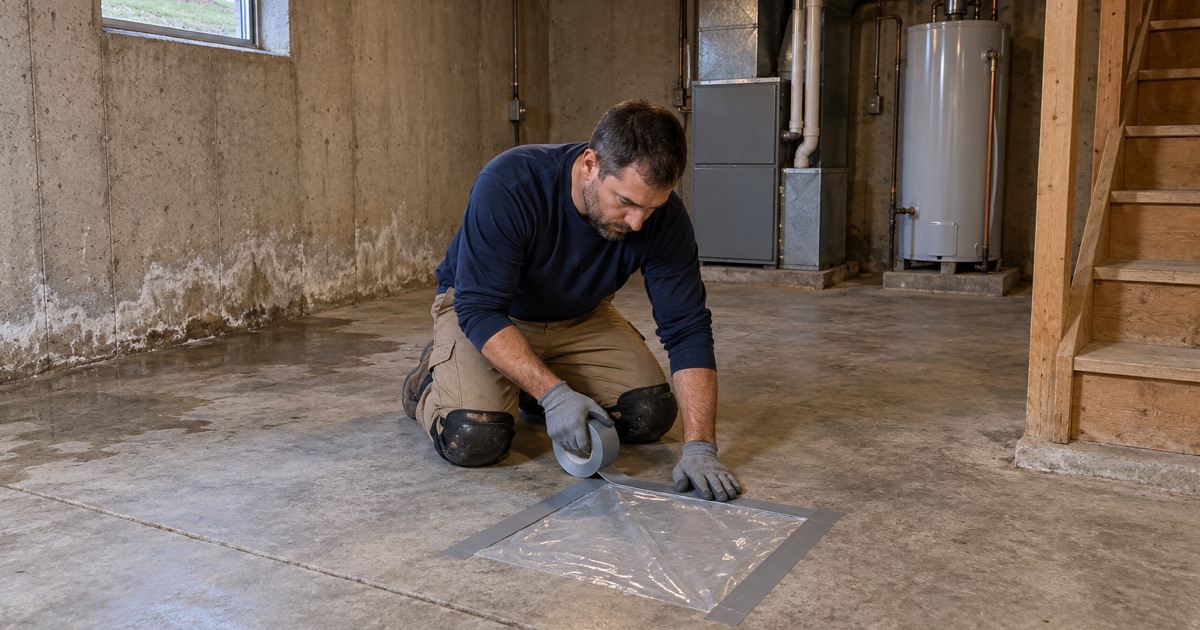
A square of clear plastic being taped down to test a bare basement slab in an older Cedar Falls ranch house, white efflorescence along the foundation wall.

Basement Floor Epoxy and the Moisture Question

Basement floor epoxy can turn a dusty, stained slab into a clean, bright floor, but in a basement the moisture question comes first. A below-grade slab is in contact with damp soil on its underside, and some older basement floors were never poured with a vapor retarder at all.

We test the slab and look for signs of past water before recommending a system. That decides whether a standard epoxy, a breathable sealer or a moisture-mitigation primer is the honest choice.

Sump Pits, Drain Tile and Floor Drains

Many Cedar Valley basements have a sump pit, drain tile and one or more floor drains. A coated floor has to meet those features cleanly, with the coating terminated neatly at the sump lid and the floor drain so water still runs where it should.

We also check that the sump pump is working and that the drain is not backing up. A coating does not fix a drainage problem, and it should not be asked to.

Old Basement Floors With Paint, Patches and Tile Glue

Older basements often carry layers of paint, patching compound and black tile adhesive from flooring removed years ago. Coating over those layers means the new floor is only as strong as the weakest one underneath.

We grind down to sound concrete, remove failing coatings and adhesive residue, and fill old patches with compatible repair material. Cedar Falls has more than 2,000 housing units built in 1939 or earlier, and many of those basement floors need this kind of preparation.

Efflorescence and White Powder on Basement Floors

White powder on a basement floor is efflorescence, the salt left behind when water moves through concrete and evaporates at the surface. It is a sign that moisture is moving through the slab, even if the floor looks dry most of the year.

We treat efflorescence as a reading, not a cosmetic issue. It sends us to the moisture test and sometimes to a mitigation primer before any color coat goes down.

Moisture-Mitigation Primers for Damp Slabs

A moisture-mitigation primer is a specialty base coat designed to hold back vapor coming up through a slab so the coating above it can bond. It is used when testing shows the slab is too damp for a standard epoxy primer.

It adds cost and a step, which is why we test first and only specify it where the numbers call for it. It manages vapor, not liquid water, so it is never a fix for seepage or flooding.

Basements Near the Cedar River

The Cedar River at Cedar Falls crested at 102.1 feet in June 2008, and the city now regulates its 500-year floodplain. Many lower levels near the river have taken on water at some point.

A coated floor can make cleanup after a minor water event faster, because water and silt sit on a sealed surface rather than soaking in. It cannot stop floodwater, and we never sell it as flood protection.

Coating After a Basement Takes on Water

If a basement has recently flooded or had seepage, the slab has to dry before it can be coated. Concrete can hold water for weeks after the surface looks dry, and coating it too soon traps that moisture.

We test the slab after drying and set the schedule from the results. Sometimes that means waiting, and we would rather tell you that than coat a wet floor.

Laundry Rooms, Workshops and Home Gyms

A coated basement floor makes a laundry room easier to keep clean, gives a workshop a surface that sweeps up sawdust and shrugs off spills, and gives a home gym a floor that wipes down after a workout. We match the texture and topcoat to the use, with more grip near the washer and under gym equipment and a tougher finish where tools and machines sit.

Coating Warranty Exclusions

Most floor coating warranties exclude failures caused by moisture vapor transmission and hydrostatic pressure from below. In a basement those are the two most likely causes of trouble, which is why we name them before the job is sold. We walk you through what the manufacturer and our workmanship warranty cover, and what they do not, so you can decide with the whole picture.

Radon and Waterproofing Are Separate Work

The EPA lists every Iowa county in its highest radon zone, and many basement owners ask whether a floor coating helps. It does not, and we never sell a coating as radon work. In Iowa, radon testing and mitigation take a state credential, and that work belongs to a credentialed radon professional.

A floor coating is also not waterproofing. If your basement needs radon mitigation or water control, that work should be done first, and we coat the floor afterward.

Color, Flake and Finish

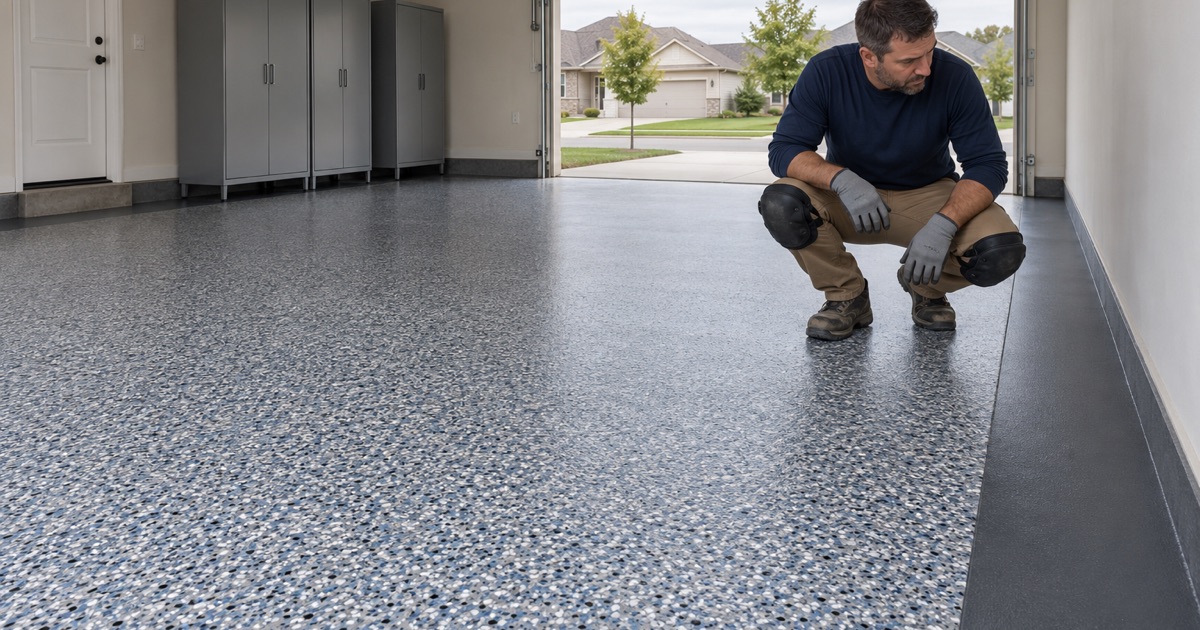
A blue-gray flake field framed by a solid charcoal border band in a Cedar Falls garage, the worker crouched to look along the line between them.

Vinyl Flake Epoxy Floors

A vinyl flake floor is built by broadcasting colored chips into a wet base coat, then scraping and sealing them under a clear topcoat. The blend and the chip size change the look, from a tight, speckled granite effect to a bold, open pattern.

Flake also hides small slab imperfections and adds texture underfoot. It is the most popular choice for garages because it looks good and wears well.

Metallic Epoxy Floors

A metallic epoxy floor uses pigments that move in the wet coating to create a marbled, flowing finish. It takes a well-prepared slab, careful mixing and practiced technique, because the pattern is set as it is rolled and moved.

We use metallic floors for showrooms, basements and home bars where the floor is part of the design. Each one is unique, and we show samples before choosing colors.

Polished Concrete and Aggregate Exposure

Polished concrete is the slab itself, ground, densified with a lithium silicate densifier and polished to the sheen you choose. How deep we grind decides how much aggregate shows, from a cream finish with little stone to a full exposure of the rock in the mix. Polished floors suit commercial spaces, retail and finished basements that want a modern look without a coating on top.

Choosing Gloss, Satin or Matte Sheen

High gloss looks sharp and bright but shows dust, scratches and tire marks more easily. Satin and matte finishes hide everyday wear better and can be more forgiving in a working garage. We help you choose a sheen based on how the floor will be used and how often it will be cleaned, not just how it looks on the sample board.

Quartz Broadcast Floors for Color and Grip

A quartz broadcast floor uses colored quartz aggregate in place of vinyl flake. It adds color and slip resistance in one step and is harder wearing than flake under heavy traffic. We use quartz in commercial spaces, kitchens, locker rooms and anywhere wet floors need reliable grip.

Solid Color Floor Coatings

A solid color coating is the simplest option, a pigmented epoxy or polyaspartic with no flake. It suits shops, warehouses and utility rooms where the floor needs to be bright, clean and easy to mark for safety lanes. Sometimes a plain floor is the right call, and we will say so rather than upsell a decorative finish.

Sunlight, UV Exposure and Ambering

Standard epoxy can yellow, or amber, when exposed to ultraviolet light from sunlight through a garage door or window. That is why we put an aliphatic polyaspartic or polyurethane topcoat over epoxy where the floor sees sun. The topcoat keeps the color stable and protects the base from wear.

Saw-Cut Lines, Borders and Logos

Saw-cut lines, borders and logos can be built into a coated or polished floor to create a pattern or brand a space. We plan the layout before grinding so the lines fall where they should. It is a popular choice for showrooms, shops and garages that want something a little different.

Shops, Labs and Commercial Floors

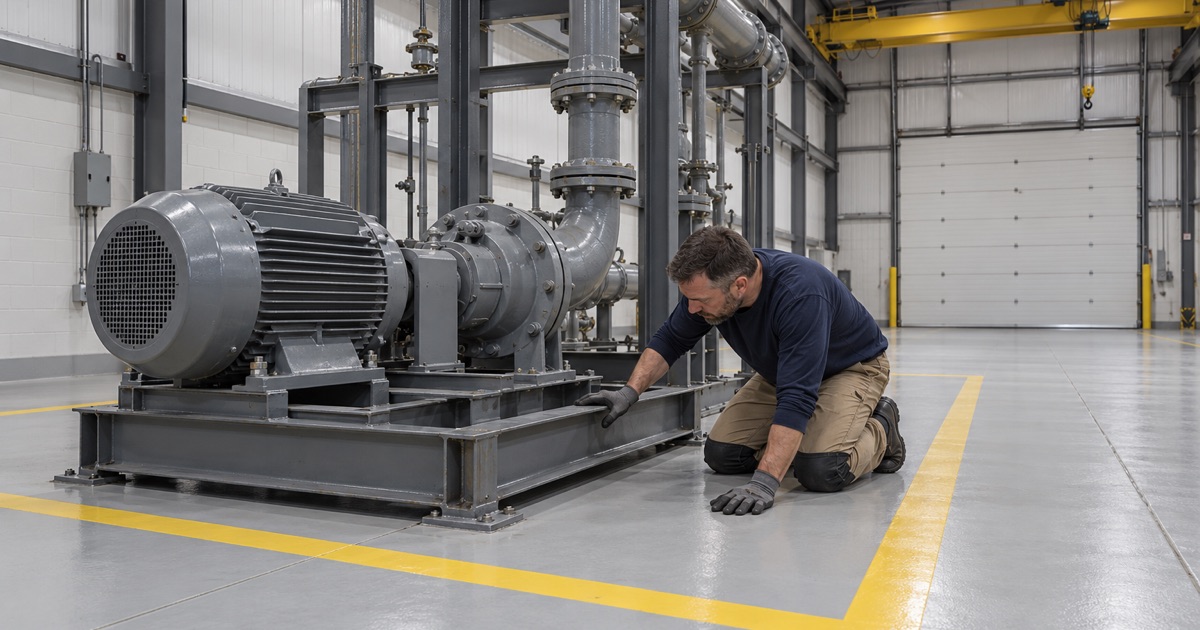
A large pump assembly on a steel test skid in a Cedar Falls engineering test lab, the gray epoxy floor marked with a yellow safety border.

Commercial Floor Jobs Versus Residential Work

A commercial floor job is bigger, but the real difference is scheduling, documentation and the number of people affected. Work often has to happen in phases, around operations, and with insurance and safety paperwork in place. We plan each commercial project around how the space is used and give a written schedule that the facility team can work with.

Manufacturing Floors for Oil, Coolant and Hydraulic Fluid

Manufacturing floors see oil, coolant, hydraulic fluid and dropped parts. The coating has to resist chemicals and impact and stay bonded under heavy traffic. We specify thick, chemical-resistant systems and pay close attention to joints and transitions, where most commercial floors fail first.

Engineering Labs and Test Cells

Cedar Falls has engineering test labs, including Deere’s Product Engineering Center and Viking Pump’s lab, where floors have to stay clean and level around dynamometers and test equipment. A lab floor needs to be durable, chemical resistant and easy to keep clean. We work around equipment and schedules, and choose a system that suits the loads and spills the room actually sees.

Food Plant Floors and Cleaning

Food plant floors are cleaned often and sometimes with hot water and strong chemicals. The coating has to survive that cleaning without softening, cracking or harboring bacteria. We choose the system based on the cleaning regime, the temperature and the chemicals used, and plan the texture to balance grip and cleanability.

Urethane Cement for Hot Water and Cleaners

Urethane cement is a heavy-duty flooring system that handles hot water, thermal shock and harsh cleaners better than standard epoxy. It is common in food plants, breweries and commercial kitchens. We use urethane cement where the floor sees hot wash-down or steam cleaning that would soften an epoxy.

Warehouse and Cold Storage Floors

Warehouse and cold storage floors carry forklifts, pallet jacks and racking. The coating has to handle wheel loads and abrasion, and in cold rooms it has to be installed with the temperature in mind. We plan these jobs around operations and choose systems rated for the traffic and the temperature.

Farm Shops and Equipment Dealer Service Bays

Farm shops and equipment dealer service bays see mud, grease, fluids and heavy equipment. A coated floor makes cleanup easier and helps keep the shop bright and safe. We choose systems with good chemical resistance and texture for these working floors.

Restaurant Kitchens, Coved Bases and the Food Code

Restaurant kitchens in Cedar Falls are inspected by the Black Hawk County Health Department under the FDA Food Code as Iowa adopts it. Floors must be smooth, durable, easily cleanable and nonabsorbent, and coved bases make the floor and wall junction easy to clean. We install coved bases and choose a texture suited to wet areas, so the floor meets inspection and stays safe underfoot.

Office, Clinic and Showroom Floors

Office, clinic and showroom floors need to look finished and professional. Polished concrete, metallic epoxy and solid color coatings all work well here. We help you choose a finish that fits the space and holds up to foot traffic.

Federal VOC Limits and Low-Odor Coatings

Floor coatings sold in the United States must meet the federal limits for volatile organic compounds under 40 CFR 59 Subpart D, which caps floor coatings at 400 grams per liter. Iowa does not have its own VOC rule for floor coatings. Low-odor products are still worth asking for in occupied buildings, because they make it easier to keep working while the floor cures.

Night and Weekend Work for Businesses That Stay Open

Many businesses cannot close for a floor job. We work nights, weekends and in phases so the business can keep running while the floor is done. We plan the schedule with you before the job starts so there are no surprises.

Areas We Serve

Cedar Falls Epoxy Flooring provides epoxy-flooring throughout the greater Cedar Falls area, with the same crews and the same standards on every job.

  • Epoxy-Flooring in Waterloo
  • Epoxy-Flooring Services in Evansdale
  • Waverly Epoxy-Flooring
  • Epoxy-Flooring in Independence
  • Epoxy-Flooring Services in Oelwein

Good to know

Frequently Asked Questions

How much does an epoxy floor cost in Cedar Falls?

Price is set by the slab more than by the coating. Square footage, the state of the concrete, how many cracks and spalls need repair, whether an old coating has to come off, and which system you choose all move the number. We price after we have mapped the floor and tested it for moisture, and the written quote names the product line, coat count and finished thickness so you can compare it fairly.

How long does an epoxy garage floor take to install?

Most residential garages take one to three working days on site, depending on repairs and the system. Foot traffic usually returns within a day of the final coat, and vehicles wait longer. Cure times depend on slab temperature and the dew point, so a cold slab in November will take longer than the same floor in June, and we tell you that before we schedule.

Do you need a license to install floor coatings in Cedar Falls?

Cedar Falls does not issue a contractor license of its own. Contractors working in Iowa register with the state Department of Inspections, Appeals and Licensing, and permitted work in Cedar Falls needs a certificate of liability insurance on file with INRCOG. We will never claim a license the city or state does not issue, and we provide insurance paperwork when a commercial project asks for it.

What is the difference between epoxy and polyaspartic?

Epoxy builds thickness and bonds hard to a properly ground slab, and it is often used as the base coat. Polyaspartic is an aliphatic topcoat that cures faster and holds its color better under sunlight. Many garage systems use both, with an epoxy or polyurea base and a polyaspartic clear coat over a flake broadcast.

Why do you grind the concrete instead of acid etching it?

Acid etching leaves an uneven profile and residue that can weaken the bond. A diamond grinder or shot blaster removes the weak top layer, opens the pores and leaves a measurable surface profile on the ICRI CSP scale. Our proposal names the profile we are grinding to, so you know what the coating will be bonded to.

Can you coat a floor in the winter?

Heated garages, basements and commercial interiors can be coated year-round. An unheated garage is different, because the slab can sit too cold or too close to the dew point for the coating to cure properly. When the slab temperature says to wait, we say so and book the work for a warmer stretch.

Will an epoxy floor stop water in my basement?

No. A floor coating is not waterproofing and it will not stop seepage or hydrostatic pressure from below. We read the basement for past water first, check the sump pit, floor drain and any white efflorescence, and test the slab. If water is getting in, that has to be solved before a coating is worth putting down.

Is an epoxy floor safe to walk on when wet?

A smooth, glossy coating can be slippery when wet. We add texture with a fine aggregate or a flake broadcast in garages, entries and wet areas, and choose a heavier texture for commercial kitchens and wash-down rooms. The right texture is a balance between grip and how easily the floor can be cleaned.

How long will a coated garage floor last?

A properly prepared, professionally applied system lasts far longer than a thin roll-on kit, but its life depends on the slab, moisture, traffic and care. Road salt, hot tires and dragged equipment are the usual wear points. We explain what the manufacturer warranty covers, and what it excludes, before you sign.

Ready to Get Started?

Request a free quote today and we'll get back to you fast.